


German Farmers Reject EU-MERCOSUR Free Trade Agreement
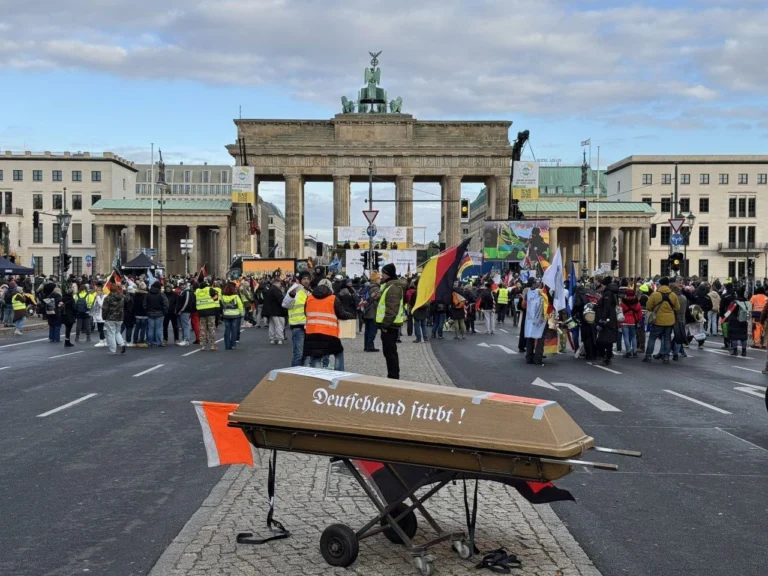
X/jpmasespanol.
January 8, 2026 Hour: 10:33 am
The deal reduces farmers’ decision-making power and creates market dependence.
On Thursday, the German farmers’ alliance “We’re Fed Up!” rejected the free trade agreement between the European Union (EU) and the Southern Common Market (Mercosur), deeming it harmful to farmers and consumers.
RELATED:
German Pension Levels are Unsustainable: Merz
Xenia Brand, the director of the Peasant Agriculture Association (AbL), stated that the treaty promotes cheap and interchangeable production, which contradicts the pursuit of agricultural quality and sustainability in Germany.
Brand pointed out that decisions are still pending in Brussels and called for the agreement to be rejected. She emphasized that farmers on both sides of the Atlantic “unanimously oppose it.”
AbL member Dorothee Sterz warned that the treaty also reduces farmers’ decision-making power, creates market dependence, and affects consumers by importing meat produced with “antibiotics as stimulants.”
Sterz added that the agreement threatens the livelihoods of European and Latin American farmers, as well as food sovereignty, by basing food on products with “deficient social and environmental standards.”
The text reads, “European farmers begin a day of protests, including road blockades, demanding policies in favor of these sectors in light of the imminent free trade agreement with Mercosur.”
Brand also criticized the safeguard clause approved by the European Parliament in December, calling it a “minimal measure” that does not resolve the structural problem of the treaty with Mercosur.
The German government defended the EU-MERCOSUR FTAA, calling it a geopolitical and commercial milestone. Government spokesperson Strefan Kornelius highlighted its symbolism as an example of cooperation based on law and agreements.
On Dec. 10, Germany approved the signing of the Mercosur trade agreement, comprised of Argentina, Brazil, Uruguay, and Paraguay, which was negotiated over 25 years to create a large free trade area.
The government emphasized that the agreement will benefit small and medium-sized exporting companies, granting them access to a market of 260 million people and strengthening resilient supply chains.
The pact will eliminate tariffs on European exports such as vehicles and textiles and facilitate imports of meat, sugar, and rice from Mercosur, which seeks to balance trade benefits between the two regions.
teleSUR: JP
Source: EFE – DW